
It takes a special person to become an ice hockey official. It’s a tough job and not for everyone. We had the opportunity to speak with two IIHF referees, shedding light on their responsibilities, pre-game preparation, and their commitment to preserving the integrity of the game.
“Fans only see one side of the game,” says Swiss referee Cedric Borga, who recently worked at the 2026 IIHF World Junior Championship alongside linesman Michael Stalder, a fellow countryman.
Both have a long relationship with the game of hockey, first as players and later as officials. Both also have fathers who were referees - although in Borga’s case, his father officiated on green soccer pitches. Both agreed to take part in an IIHF interview focused on integrity, which is the central theme of this week.
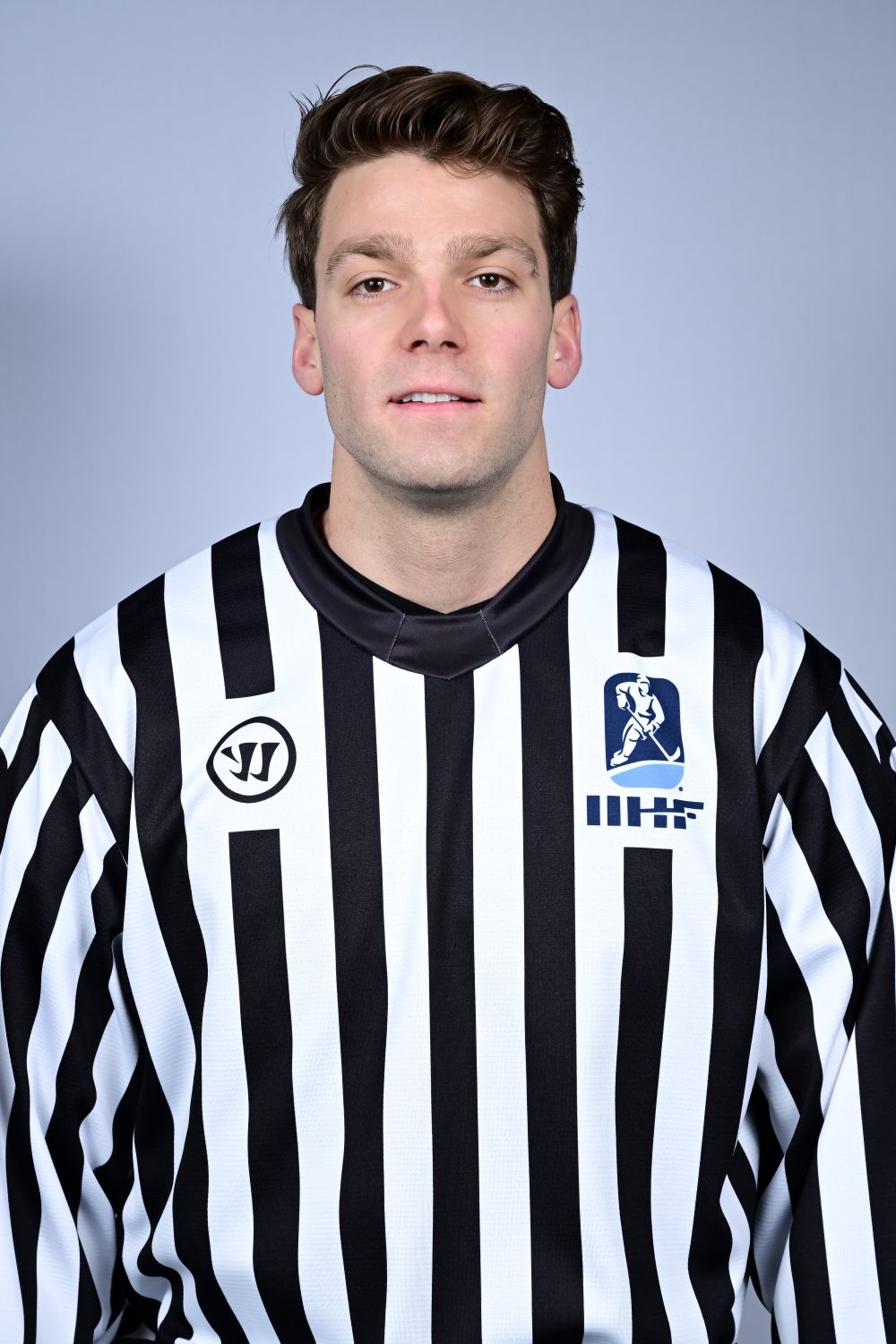
Borga started as a linesman in the Swiss minor leagues and graduated to the top Swiss league as a linesman. He also worked as a linesman at an IIHF Under-18 Ice Hockey World Championship Division III tournament in Taiwan before switching lanes and becoming a referee – only to climb the ladder back up.
Stalder, in turn, has made a similar trek from the Swiss League to the National League and IIHF tournaments. His first was an Under-18 Division II tournament in Belgrade, Serbia, in 2023.
While most acknowledge the importance of having referees and linespersons in the game, few consider the challenges they face or what their work actually looks like. It’s all a matter of vantage point. Everything is different once you get to ice level.
“In the lower leagues it was easier to skate faster than the players, and once I learned to manage the speed in the better leagues, the biggest challenge was being consistent. As a referee, you have to be able to work many games a week throughout the season,” says Borga, who is a professional referee.
“The speed of the game is the biggest challenge and does take adapting,” agrees Stalder.
“And communicating with the players. We need to be as sharp as they are.”
As in any profession, those who make it all the way to the top don’t go easy on themselves. On the contrary, the on-ice officials set a high bar for themselves.
“We expect more from ourselves than the coaches or players do,” Borga says.
Proper preparation is the key
These days, a fan sitting at home – or even in the stands – has an advantage over the officials. They’re called replays.
“We have only one chance to look at a play, and that can be stressful. We have to make a decision quickly and be fair. There’s no one right way of looking at it, but we need to control the game and make it as fair as possible for the teams and players,” Stalder says.
“It doesn’t help anyone if we get nervous; then we start to make mistakes, and the coaches and players see that,” Borga adds.
That’s why both Borga and Stalder carefully prepare for their games. Borga, who officiates for a living, begins his game-day preparation in the morning, when he gets into the right frame of mind, maybe watches video of the teams, and goes for a walk before driving to the arena and meeting with the crew.
Stalder likes to get to the rink early.
“I’ll unpack my stuff, get inside my bubble, then kick a football with the rest of the officials and relax,” he says. “I may even learn the centers’ first names so that I can address the players at faceoffs by name. Sometimes that surprises them.”
Thanks to proper preparation, once the game starts, they can keep an open mind and simply call the game as they see it.
“I like to think that I’m like a sponge at the start of the game,” Stalder says.
Just taking it all in as it comes. He adds that his past experiences help him stay calm and confident.
“The more experience you have, the more at ease you can be,” he says.
Hockey is a fast game, though, and even four pairs of eyes can miss something.
“We make mistakes, but we’re there to serve the game as well as possible,” Borga says.
“Fans forget that we, too, are athletes who want to do our best. We aim for perfection, even if we can’t achieve it,” he concludes.